Filed under: General Health, Training, Youth Training
As you are well aware, I don’t blog like I used to. This is simply due to all of the work and writing I already do at PN.
However, when I do blog, it’s usually to share:
- some cool work I’m doing or have recently done at PN;
- upcoming public seminars or workshops I’m giving; and/or
- helpful, newly available resources that can benefit you.
Today is option #3.
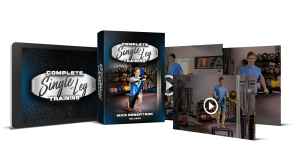
Mike Robertson has created an excellent new resource – Complete Single-Leg Training.
Mike is a friend of mine, and one of the most sought after trainers and coaches in our industry.
He’s trained professional athletes from virtually every major sport.
He is also the co-owner of IFAST, an incredibly popular training facility that has been named one of the Top 10 Gyms in America by Men’s and Women’s Health magazine numerous times.
So yeah – the guy knows what he’s doing!
If you’ve ever asked yourself any (or all) of these questions:
- Do single-leg lifts really replace bilateral lifts like squats and deadlifts?
- How should I be coaching them for maximum effectiveness?
- What is the best way to progress someone to improve their single-leg training?
Then you should check out Mike’s Complete Single-Leg Training.
Ultimately, here’s the deal. Mike is a super smart dude. He’s always asking questions, always looking to learn, grow and improve.
I’m not a salesman; I’m a dietitian, nutrition coach and strength and conditioning coach. And I found this product to be very helpful for my own training, as well as training my own clients.
It gave me a system for using single-leg work, and if you know anything about me, you know that I find systems, processes, and concepts to be the KEYS to consistently helping folks, as well as myself. It makes it easy to know when to include single-leg work, what to include for whom, and when NOT to include it. This makes my job easier, clearer, more effective and more efficient. What coach doesn’t want that?
So, check it out. See if it’s right for you. And let me know what you think.
So yeah – the guy just might know what he
’
s doing!
Filed under: General Health, Nutrition, Training
Lots of posts about my presenting, but I seem to be doing lots of presenting this year :).
I am honored to be presenting at the largest and longest-running fitness event in the world, the 2017 IDEA® World Convention, this July in Las Vegas.
I want to share my exclusive presenter discount with you. Save up to $100 on your registration by using code WORLD17+StPierre.
Go to www.ideafit.com/world to learn more about the two presentations I am giving:
- Pre-Conference full-day workshop: Precision Nutrition Coaching Revealed
- The Cost of Getting Lean: Is it worth the tradeoff?
I hope to see you there!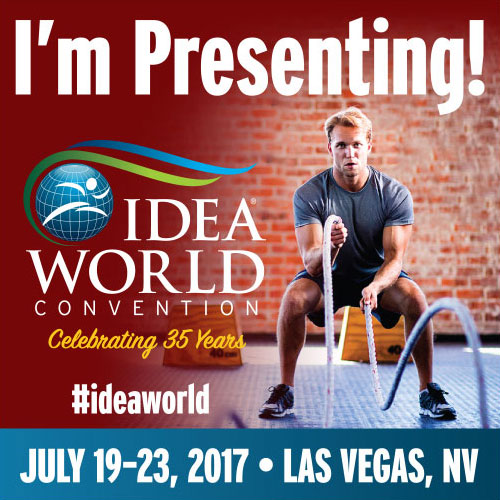
Filed under: General Health, Nutrition
I’m excited to announce that I will be giving a full-day workshop at Cressey Sports Performance in Jupiter, FL on April 9th.
==> http://ericcressey.com/cressey-sports-performance-nutrition-seminar-april-9
I delivered a similar full-day workshop at CSP MA last April, and it was an awesome experience.
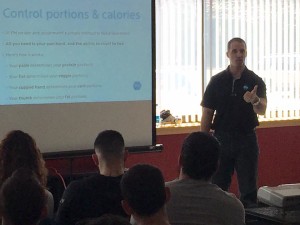
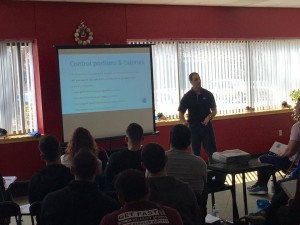
This is the kind of nutrition coaching workshop I wish I had attended 10 years ago, when I was fresh out of my nutrition undergrad. It would have accelerated my knowledge, skills, and practical application 10 fold!
I go through nutrition science, nutrition assessment and triage, making appropriate adjustments, as well as providing a coaching methodology to put it all into action.
We then take all that theory and tackle some client case studies in groups, working through and applying everything we just learned. We discuss our process and next actions, debate their merits, and come out in the end feeling well prepared to provide nutrition coaching in the real world, with real people.
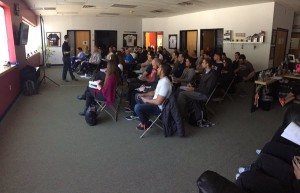
Here’s a look at our agenda for the day:
8:30am — Registration
Morning Session — Laying the Foundation
- 9:00am — Human metabolism and the calorie conundrum
- 10:00am — Proteins, carbs, and fats: Why each is critical
- 11:00am — Supplements: What works, what might, and what doesn’t
- 12:00pm — Q&A
- 12:30pm — Lunch
Afternoon Session — Practical Application
- 1:30pm — How to assess and where to begin: Triaging nutrition
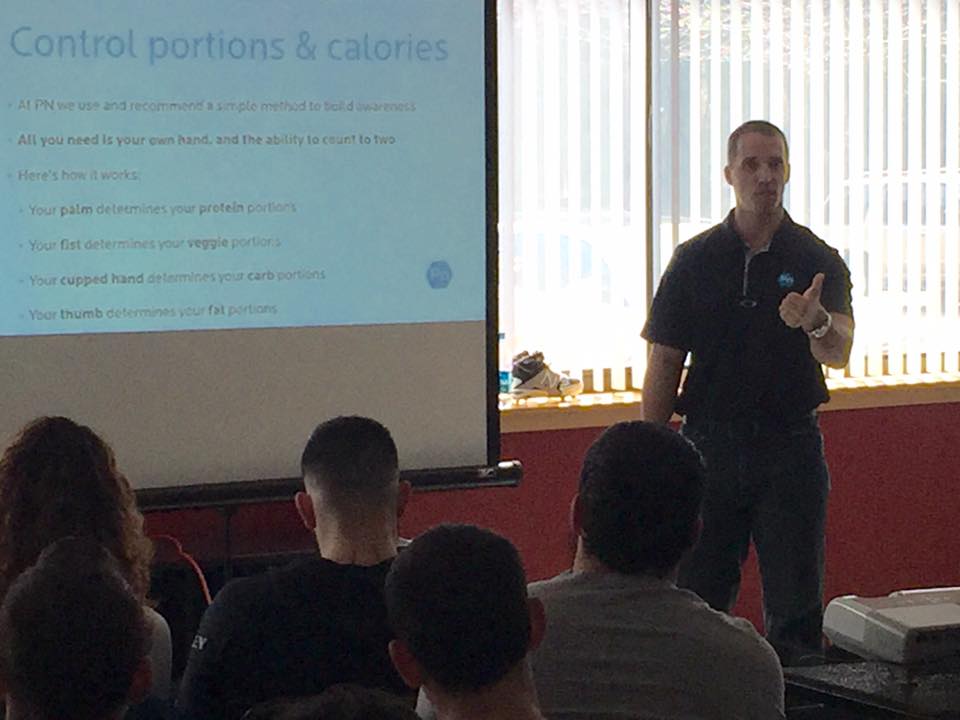
- 2:30pm — Controlling portions and making adjustments
- 3:00pm — Dietary adjustments for advanced fat loss and muscle gain
- 3:30pm — Breakout session: Problem solving and case studies
- 4:30pm — Closing remarks and Q&A
Sign up now to grab the early bird discount for $20-30 dollars off!
==> http://ericcressey.com/cressey-sports-performance-nutrition-seminar-april-9
Filed under: General Health, Nutrition, Training
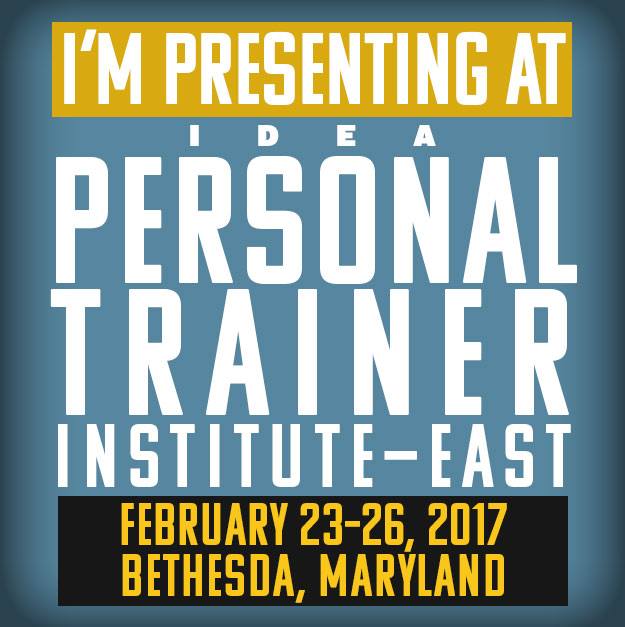
I’m honored to be presenting at the 2017 IDEA Personal Trainer Institute in Bethesda, MD, and I want to share my exclusive presenter discount with all of you.
Get $30 OFF your full or 1-day registration by using coupon code TRAINER17+StPierre.
Go to www.ideafit.com/ptrainer to learn more.
I hope to see you there!
Filed under: General Health, Nutrition
I’m very excited to announce that on Sunday, April 10th, I’ll be presenting the CSP Spring Nutrition Seminar – a full day workshop of just me! This event will take place at the Hudson, MA location. I was CSP’s first employee, and have since moved on to be the Director of Performance Nutrition at Precision Nutrition.
Here’s a look at our agenda for the day:
8:30am: Registration
Morning Session – Laying the Foundation
9:00am: Human metabolism and the calorie conundrum
10:00am: Protein: the magical macro
10:30am: Carbs: the misunderstood macro
11:00am: Fats: the mystery macro
11:30am: Supplements: what works, what doesn’t, and what might
12:00pm: Q&A
12:30pm: Lunch
Afternoon Session – Practical Application
1:30pm: How to assess and where to begin
2:30pm: Controlling portions and making adjustments
3:00pm: Dietary adjustments for advanced muscle gain and fat loss
3:30pm: Problem solving and case studies
4:00pm: Why consistency is king
4:30pm: Q&A
Location:
Cressey Sports Performance
577 Main Street, STE 310
Hudson, MA 01749
Cost:
Regular Rate – Early Bird $129.99, Regular $149.99
Student Rate – Early Bird $99.99, Regular $129
*The early bird registration deadline is 3/10/16.
Date/Time
Sunday, April 10
Registration 8:30AM
Seminar: 9AM-5PM
Continuing Education
0.7 National Strength and Conditioning Association CEUs Pending (seven contact hours)
Click Here to Sign Up (Regular)
or
Click Here to Sign Up (Student)
I’m really excited about this event, as this is the first time I outline my nutrition coaching process in its entirety in public. Space is limited and we expect this event to fill up quickly, so don’t delay on signing up!
If you have additional questions, please direct them to cspmass@gmail.com. Looking forward to seeing you there!
PS – If you’re looking for hotel information, Extended Stay America in Marlborough, MA offers our clients a discounted nightly rate. Just mention “Cressey” during the booking process in order to secure the discount. Their booking phone number is 508-490-9911.
Filed under: Uncategorized
Today is Super Bowl Sunday, and I am writing this post from Chicago’s O’Hare airport on my way back to Maine from LA, after giving one of my Equinox Workshops to Tier 4 candidates.
While it’s unfortunate that my Patriots didn’t make the big game (and I ran into several Bronco’s fans on my travels this past week), there is a silver lining:
Eric Cressey is putting his flagship product, The High Performance Handbook, on sale for only the second time since its release. From now through next Sunday, you can get this incredible resource for $30 off the regular price.
Simply head over to the highperformancehandbook.com to find out more. And no coupon code needed, Eric has already taken $30 right off the top for your convenience.
And of course, I highly recommend the gold package option, which comes with my High Performance Handbook Nutrition Guide. It is the most comprehensive nutrition guide I’ve ever written, with 100 pages of nutrition, health, and lifestyle information and guidance to help you eat and live better.
Filed under: General Health, Nutrition, Training
I’ll be doing a YouTube interview with Sam Feltham on Thursday, April 16th at 10am Eastern. If you have any questions you want me to answer, ask them right here.
Filed under: General Health, Nutrition, Training, Weight Loss
For the first time ever, Eric Cressey’s High Performance Handbook, his most popular product, is on sale. Through this Saturday at midnight, you can get this versatile exercising resource for $50 off the normal price.
As the author of the accompanying High Performance Handbook Nutrition Guide, and having worked with Eric for 3 years, I have unique insight into the quality of his training programs. Quite frankly, they are among the best in the world. And are one of only a few that I would recommend.
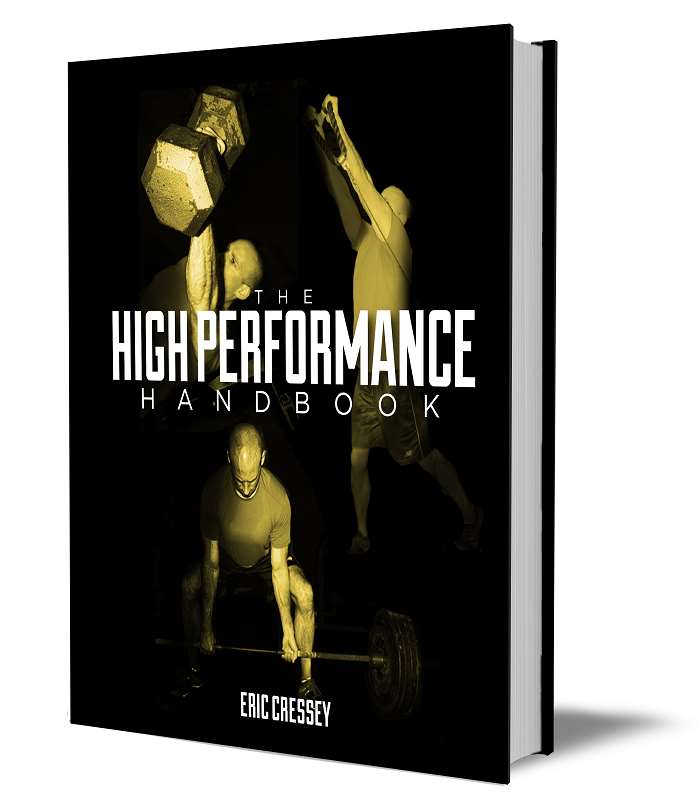
Eric went above and beyond to make sure that this resource covers all the bases. It’s not a one-size-fits-all cookie cutter program. Instead, it provides a quick and easy-to-apply – but incredibly effective – self-assessment component. This allows you to then go in a number of different ways with your training, depending on your goals, schedule, and assessment analysis. There’s even an entire chapter on modifying the program for special scenarios (over-40 lifters, overhead athletes, etc.). Eric covers it all.
Additionally, there is an insanely detailed video database that covers how to perform every possible exercise in the resource. It features over 200 exercises, each with a 30-120s coaching tutorial. That’s over three hours of videos that will be a useful resource long after you’ve completed the program.
As a final note, the High Performance Handbook also educates you along the way. You’ll learn about some of the things that are unique about your body, and how you need to manage your training accordingly. This will help you with your training for the rest of your life, not just the next 4+ months.
Here’s that sale link again:
–> The High Performance Handbook <–
And while your at it, be sure to consider the Gold Package, which is also $50 off the usual price. It includes my accompanying High Performance Handbook Nutrition Guide. It’s the most comprehensive compilation of every nutrition and health-related content I have ever put together. In fact, here is a recent email I received from a happy customer:
“Brian
I bought Eric’s handbook to help guide my personal training, and I think it’s excellent.
I went for the extra option and took your nutrition guide as well. Just to say I think it’s the most sensible, practical, no BS nutrition guide I’ve read. I’m in the sports nutrition industry and so read a lot of stuff, including all the extreme/quirky/plain odd dietary “theory” stuff. If everyone chose your guide, they would save themselves a lot of time, money and disappointment.
Just excellent Brian, thank you.
Stephen”
Thanks again for all of your continued support.
Filed under: General Health, Nutrition
My Day In The Life posts are some of my most popular, and I get requested regularly to put up more of them.
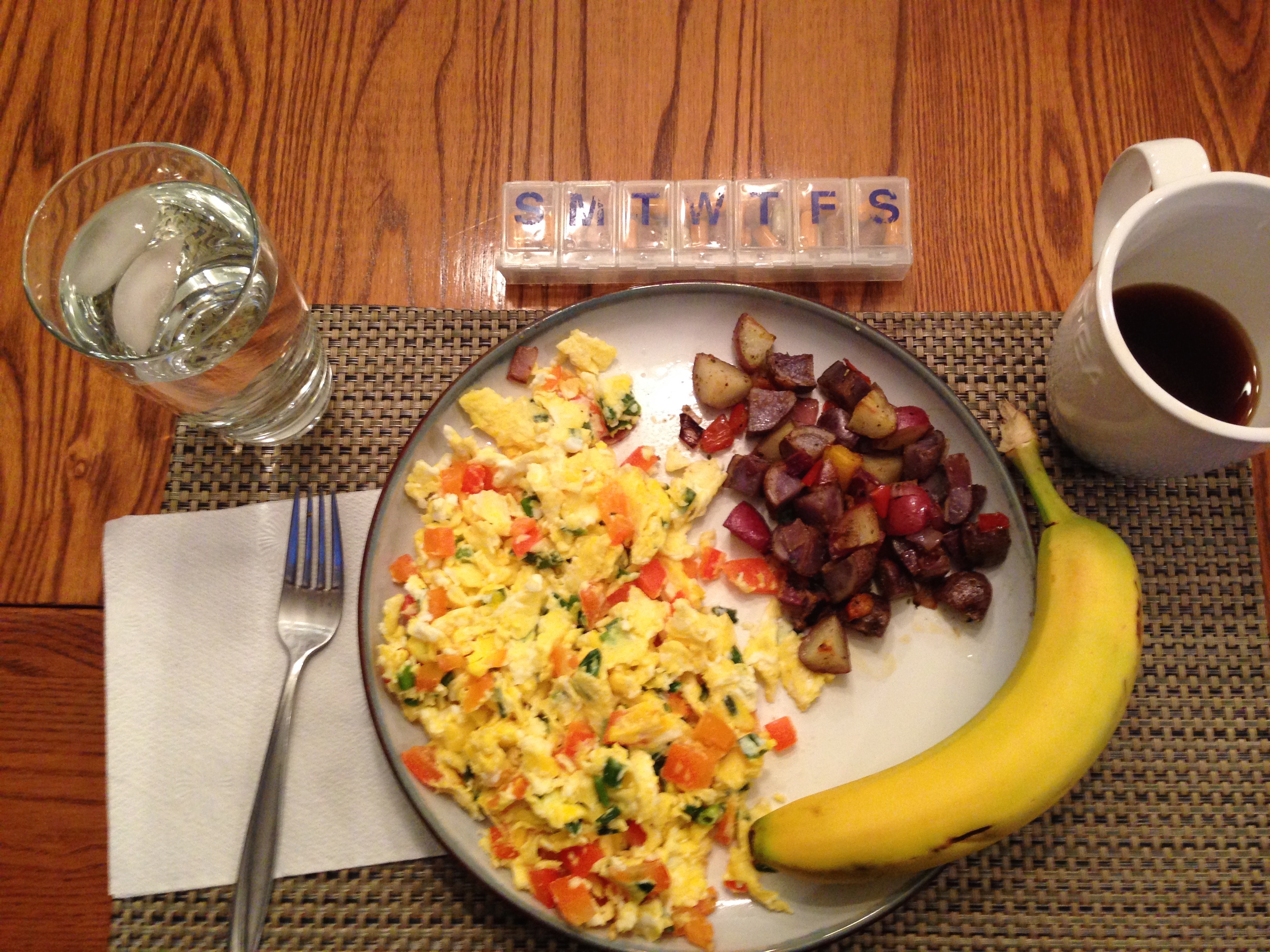
I will again emphasize that I don’t count calories or grams of anything. My intake tends to follow the PN hand-size portion guidelines, as you will see below.
Wake @ 5:30 am
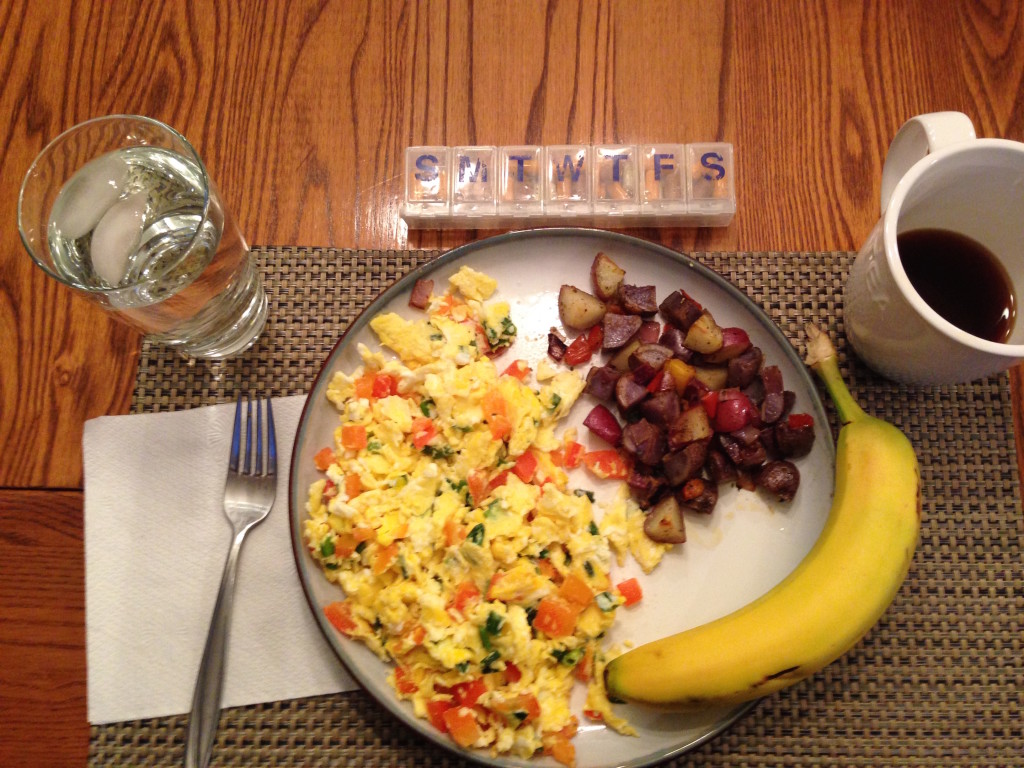
Breakfast @ 6:00 am
- 5 whole eggs (salted)
- at least 1/2 of a bell pepper (varied colors) and a bunch of scallions
- 1 handful of roasted potato mixture from previous night’s dinner (see Dinner below)
- 1 banana
- ~1/2 tbsp Kerrygold butter for eggs
- 1 glass water
- 1 multivitamin, 1 gram curcumin, 1-2 probiotics
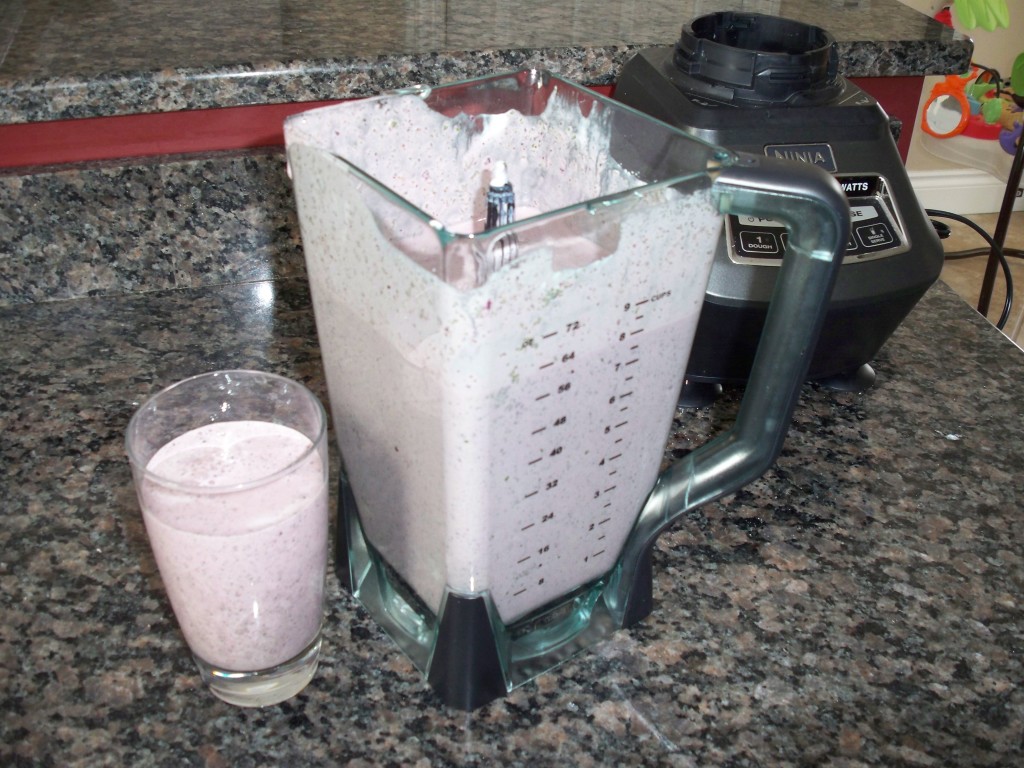
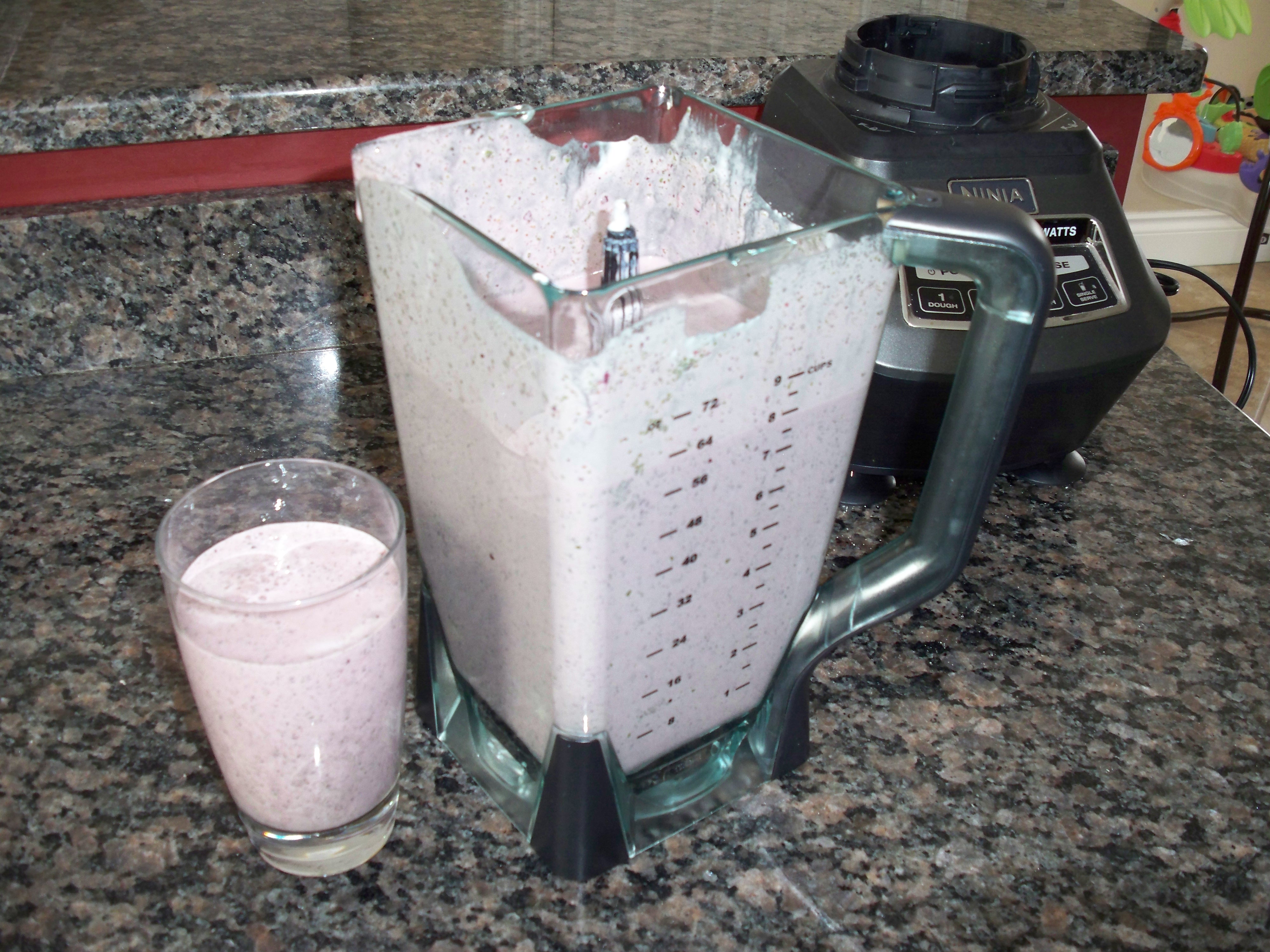
Super Smoothie @ 10:00 am
- 12-16 oz water
- 2 scoops vanilla protein powder
- 2 handfuls of baby spinach (or lately, a baby kale, baby spinach and swiss chard mix)
- 1 handful frozen blueberries
- 1 handful frozen strawberries
- ~1 tbsp chia seeds
- ~2 cups Stonyfield whole fat plain yogurt (1/2 container)
- 2-3 Athletic Greens fish oil pills
- I also usually have a cup of green tea between here and Lunch
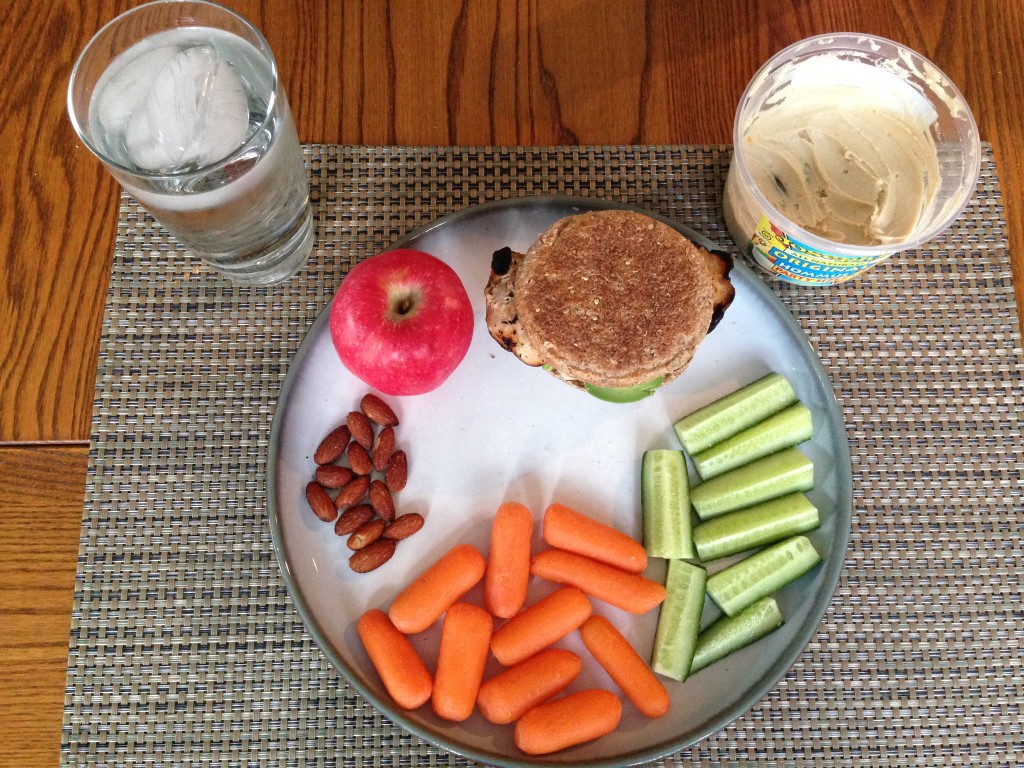
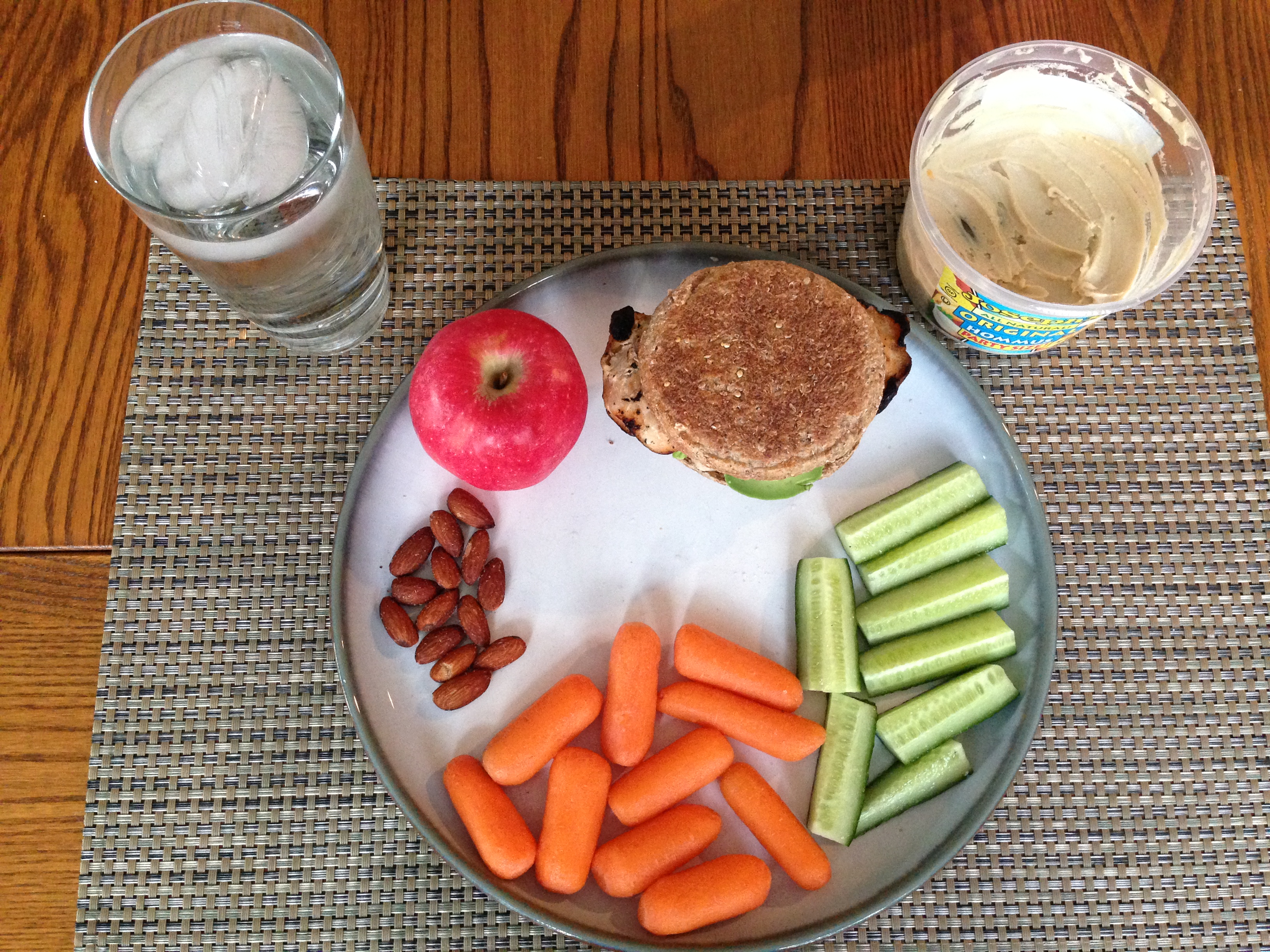
Lunch @ 2:00 pm
- 1 Ezekiel English muffin
- 1/4 of an avocado
- some dijon mustard
- 1 chicken breast
- 1 gourmet cucumber, sliced and salted
- 10 baby carrots with a little hummus
- 1/2 oz mixed nuts or almonds
- 1 apple
- 2 glasses of water
- I also usually have a cup of green tea between here and Dinner
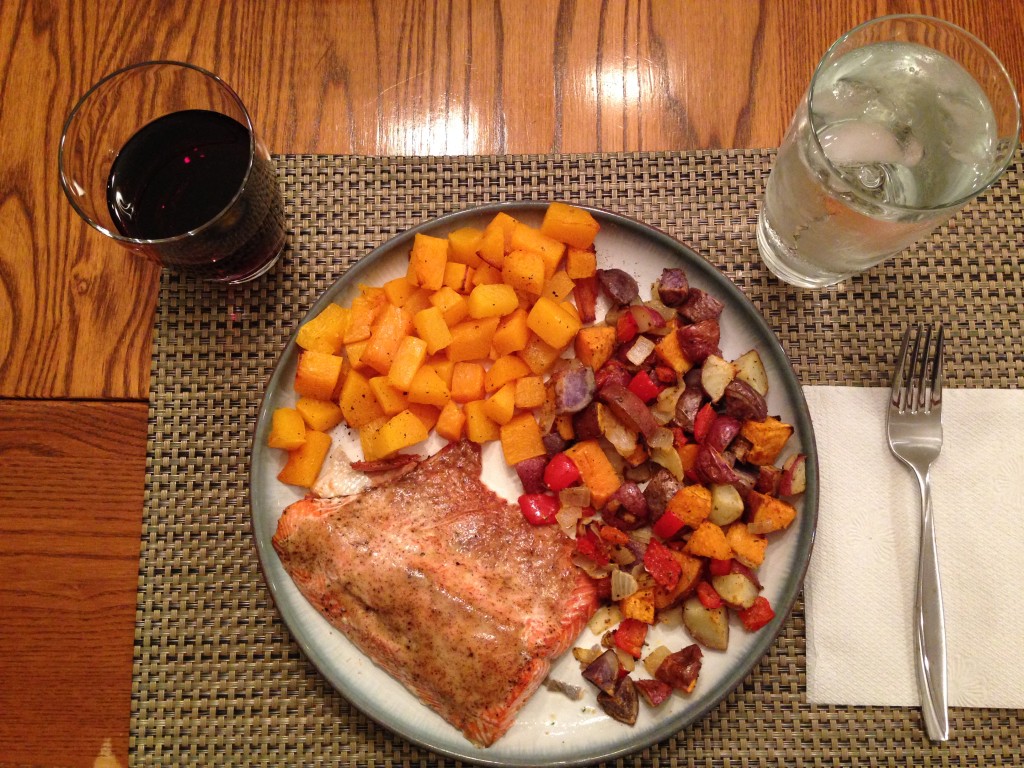
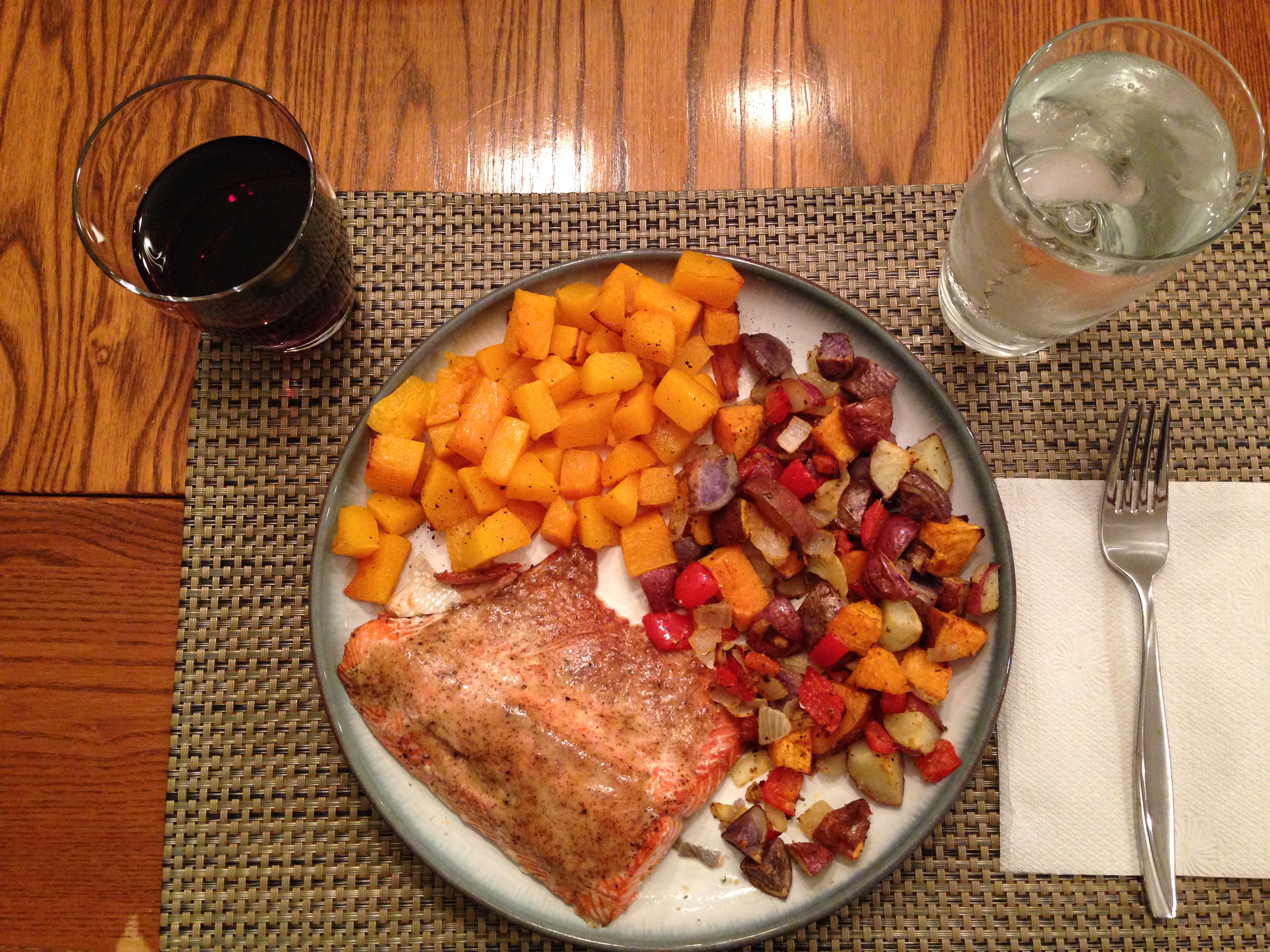
Dinner @ 6:00 pm
- ~8-10 oz wild salmon
- ~1/2 tbsp each honey, brown sugar, and dijon mustard (I use 1 tbsp of each to make the full mixture, and spread over 1 lb of salmon)
- 1-2 fists of roasted butternut squash, with extra virgin olive oil and a little salt and pepper
- 2 handfuls of roasted potato mixture: red potatoes, purple potatoes, sweet potatoes, mixed peppers, onions, with a little extra virgin olive oil and Montreal chicken seasoning
- 1 glass red wine (yes, this time it is in a juice glass, as that can go in the dishwasher)
- 2 glasses of water
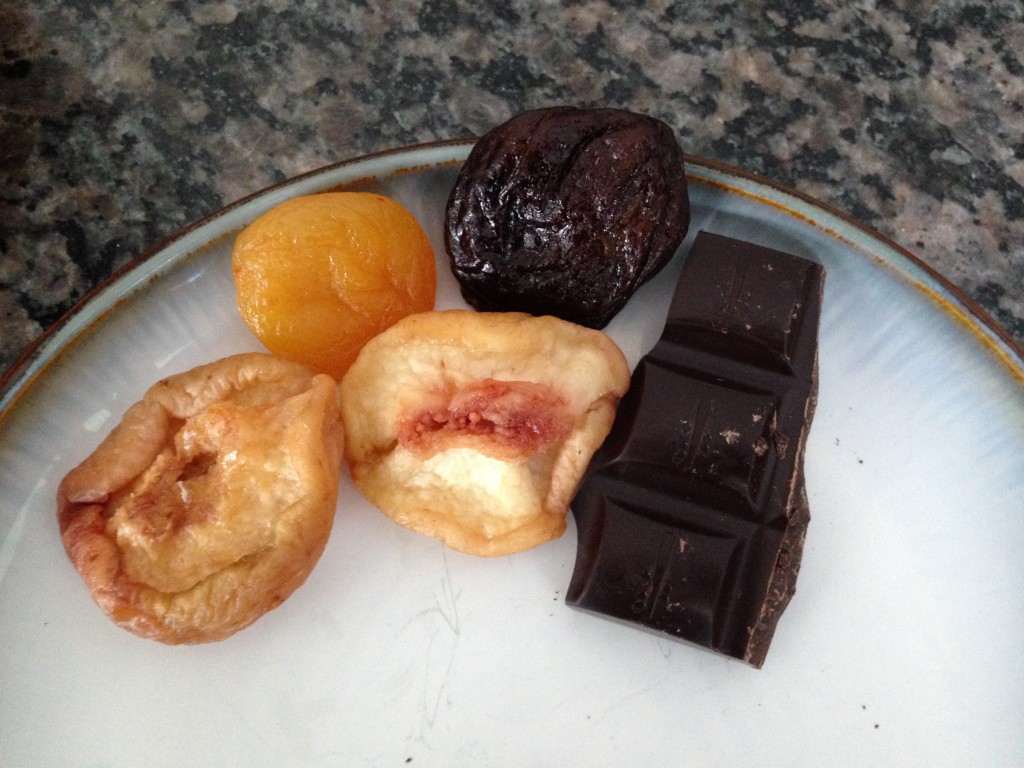
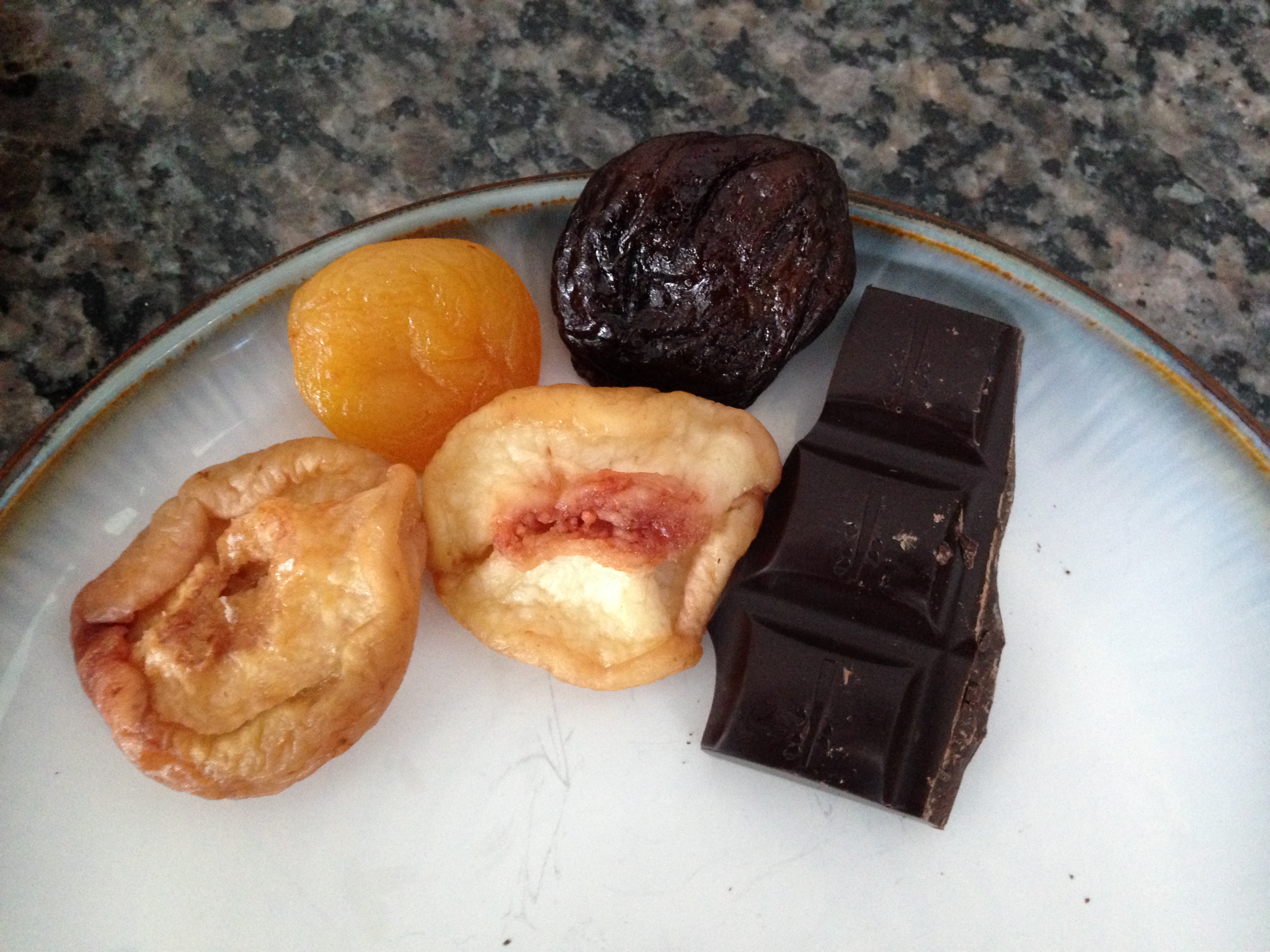
- 1 serving dried fruit and 3 squares of 88% cacao Endangered Species dark chocolate for dessert (which ConsumerLab just found to have the highest levels of flavanols of any dark chocolate tested)
I hope you get something out of seeing a snapshot of my intake. And as usual, would love to hear your thoughts, questions, and comments!
Filed under: General Health, Nutrition
I have written in the past about the health benefits of fish oil, and even about my favorite fish oil product – Athletic Greens Omega3. I will admit, it can be a little bit pricier than some other fish oils on the market. But that’s because it’s quality is second-to-none.
Well now the crew over at Athletic Greens has put together two limited time offers for Omega 3:
Buy 2 Bottles and get One Free - a 47% savings!
Buy 4 Bottles and get Two Free – a 61% savings!
Sounds like a perfect time to stock up on some fish oil!
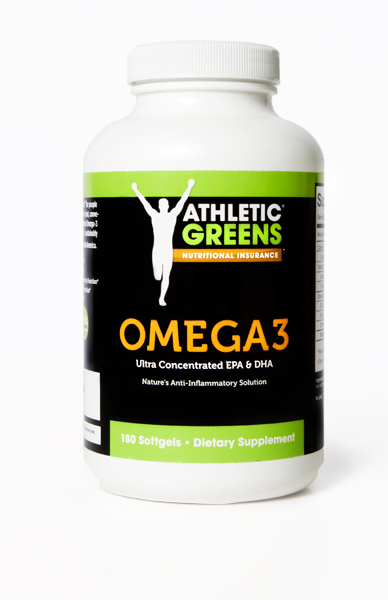
Athletic Greens Omega3

Posted on September 22nd, 2017 by Brian St. Pierre
2 Comments »