Many nutrition experts have long advocated that people eat the rainbow when it comes to their produce consumption. And beyond even that, it has been stated that you really only want to eat darkly colored fruits and veggies, as those are allegedly the best ones for you. While darkly colored produce is fantastic, as they get those colors from potent nutrients like anthocyanins and anthocyanidins, do they really stand head and shoulders above the others? Due to these recommendations, produce with minimal color like cauliflower, onions, and especially iceburg lettuce and celery, have really taken a backseat, much to my dismay.
In reality, we are still learning and discovering all kinds of new compounds and nutrients in the produce and plants that we eat, and while deep color may be indicative of the healthfulness of some produce, it is not the be all end all. In fact researchers recently discovered a compound called apigenin, which they believe to be one of the most potent anti-cancer compounds ever found! Two of the richest sources of apigenin? Humble, lightly-colored celery and iceburg lettuce.
The thing about cancer cells is that they are actually incredibly successful. At least, as far as their own survival is concerned they are successful to the extent that have a kind of immortality. This is the problem for the person with cancer, the cancer cells bypass the processes that should cause them to die as part of a regular cycle (known as apoptosis) and so they grow out of control and cancers develop. According to new research though, we now know how a substance called apigenin from foods makes cancer cells mortal again.
Apigenin is found in many plants but the best sources are parsley, celery, chamomile tea, thyme and iceburg lettuce. The researchers found that apigenin binds with around 160 different proteins in the human body. Among the most important of these though was a protein called hnRNPA2.
This hnRNPA2 protein influences the activity of messenger RNA (mRNA) which in turn carries the instructions needed to produce a specific protein. The modification of mRNA determines which protein the mRNA will cause to be produced. Abnormal modification (splicing) is the culprit behind around 80 per cent of cancers. The researchers found that apigenin, when applied to breast cancer cells, causes them to splice mRNA normally so that the cancer cells are no longer immortal and are programmed to die as usual (undergo apoptosis), or become sensitive to chemotherapy. That is awesome stuff.
So what does this all mean? It doesn’t mean that you need to take an apigenin pill, it just means you should worry less about which exact types of produce you “should” eat, and instead just eat the ones you enjoy, as that will lead to the greatest overall produce consumption, and likely your best bet for long-term health.
I just wanted to send out a big thank you to everyone at Cressey Performance for putting on a wonderful seminar this past weekend. The new facility is absolutely incredible, definitely makes me miss coaching there a little bit. For those of you who haven’t seen it, here is a nice little tour from Eric:
It was an awesome experience and I look forward to giving more talks like that in the future. Overall I think it went quite well, especially since it was my first seminar presentation. I have given loads of presentations in school, some solo talks to local high schools and such as well some in-service talks to the CP staff, but never to 200 people as part of a group seminar! We will have some cool stuff on the talk on the PN site probably some time in January, so keep your eyes peeled!
I also wanted to congratulate all of the other presenters for doing great work and providing some unique content. It was a great learning experience all around.
Last but not least, I want to thank everyone who attended. I got to meet a lot of cool people, and several readers of the blog, which was humbling and exciting at the same time. So thank you all who attended, we couldn’t have done it without you.
I know my blogging has been pretty much nil lately, but I assure you I have not been idle! Part of my job with Precision Nutrition is to write All About Articles, along with Ryan Andrews.
Quite a few of these articles have already been published. If interested check them out:
A few weeks ago I received an email thanking me and EC for the Show and Go Training Program and Nutrition Guide. It was absolutely wonderful to see someone make such tremendous improvements in his health, body composition and performance. Here is what he had to say:
“EC and BSP,
I hope you guys are doing well! I just wanted to send you two a quick note of thanks. The Show & Go System has made considerable changes to my body, both outside and inside.
I’ve completed Show & Go three times with maintenance periods in between. Initially, I completed the 4x/week program. Really effective, but required too much time given I’m working full time, teaching two courses, and finishing up my PhD. Next, I completed the 3x/week program. Finally, I went back to the 4x/week program but only lifted 3x/week. I love the upper/lower split and the recovery time between sessions it offered me. It was during this last program that I absolutely destroyed my PRs! That is no joke! Here is a listing of gains I’ve made from January 2011 until June 2012:
Bodyweight (6’1”): 192.5 —> 209.5
Body Fat: 14.5 —> 11.5
Front Squat: 165x3x5 —> 235x3x5
Deadlift (conventional): 275×1 —> 415×1
Bench Press: 235×1 —> 285×1
Pull ups: +10x3x5 —> +37.5x3x5
I’m not brutally strong, but strong for someone who wasn’t blessed with the strong gene. I could go on and on about the gains, but the primary reason I’m emailing is to thank BSP for the Show and Go Nutrition Guide and to thank EC for including it. My family has a notorious history of heart disease. My dad’s grandpa died from his first heart attack at 50, my dad’s dad died at 56 (he had four heart attacks and three strokes), my dad’s uncle died from his first heart attack at 62, and my dad had his first heart attack at 48 (thankfully still alive). Odds not trending in my favor.
My wife and I switched to eating as BSP recommended as of July 2011. I had labs done in June 2011 and just had them done again yesterday at my yearly physical. Everything keeps improving as seen in the comparison from June 2011 to August 2012:
LDL: 108 —> 88
HDL: 40 —> 64
Triglycerides: 81 —> 55
I know these aren’t the only indicators of health, but they are pretty damn important to heart health. I owe just about all of the changes I’ve made to you two! This is crazy! Oh, and all while eating 5 eggs just about every day, in light of the new study released here:http://www.sciencedirect.com/science/article/pii/S0021915012005047. Be aware that that study’s statistical interpretations are extremely suspect. Plus, any time you see researchers arbitrarily categorizing continuous variables (e.g., into quintiles) be skeptical immediately. Far too much information is lost due to categorization!
Anyways, thanks again and keep producing quality programs and providing quality information!
Best,
Ryan
p.s., In 15 months, Show & Go also transformed my wife from a non-lifting marathon runner into an absolute beast in the gym. Her current lifts are, Back Squat: 170x5x3, Conventional Deadlift: 185x5x3, full hang chin ups: 7, Bench: 110×1. At a body weight around 130. Hopefully our kids get her strong gene! Thanks again!!”
I would say those results truly speak for themselves! In a matter of 1.5 years he was able to gain 21lbs of lean body mass (muscle and its associated components, bone, etc) and lose 4lbs of fat mass, while gaining tremendous strength and drastically improving his health to boot!
A recent review determined the Triglyceride to HDL ratio as the best single predictor of heart disease risk, with a goal of 2 or less. His ratio went from 2.025 to a fantastic 0.86! Not only that he was able to lower his LDL levels while consuming 5 whole eggs per day, pretty impressive stuff if you ask me.
Show and Go: High Performance Training to Look, Feel & Move Betteris on sale for $50 off from now through Sunday, September 9 at midnight. Do yourself a favor and grab a copy of this incredible and comprehensive training program, and at the same time purchase the tag along Show and Go Nutrition Guide, written by yours truly. You won’t regret it, as you can see it can help you improve your healthy, body composition and performance all at the same time.
As promised, here is my nutrition and supplement plan for my injury recovery. The article itself went up on ericcressey.com It was excellent timing as EC asked if I could write a guest post as he was going to be out of town for the week, so I threw it his way. Check it out!
This week I wanted to highlight a fantastic food that can be utilized in many different capacities – guacamole! A while back (like 3 years ago) I wrote a piece about my favorite condiments, which of course guacamole was on the list and that certainly has not changed.
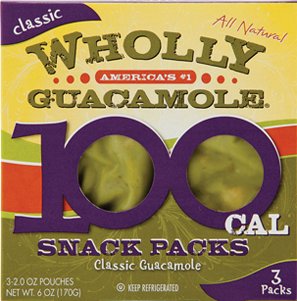
In particular I want to highlight the Wholly Guacamole 100 Calorie Packs. While I don’t normally endorse 100 Calorie Pack foods because they are usually junk, in this case you get a pre-set portion of a healthy item. In addition since guacamole tends to good bad quickly when exposed to air, utilizing these small packages limits waste.
One great way to use guacamole is in place of meals where you, might use mayonnaise. It provides that same creamy texture, but is less calorie dense, provides a serving of produce (avocados are one of those in between types, where they are treated as both fruit and vegetable) and provides a good source of fiber, potassium, lutein and more.
In terms of consumption I like to use half of the package on my sandwich or wrap, and use the other half with a serving of baby carrots, cucumber slices or bell pepper slices. You are using produce as a condiment for produce! Now that is a winning combination.
In the end guacamole can be used in a lot of different ways, provides a creamy texture with a mild flavor, is made up of mostly avocados and provides more than 25 essential nutrients.
Strength Training Programs: The 7 Most Common Power Clean Technique Mistakes- by Wil Fleming. This was a guest post on Eric Cressey’s blog that I thought was excellent. Wil addresses seven common technique mistakes of the clean (probably the most butchered exercise in history, and that is saying a lot!) in an easily understood manner, along with some helpful videos.
Q & A: Fixing the “Tuck Under” When Squatting Part 1 & Part 2 – by Tony Gentilcore. Having the pelvis tuck under when squatting is an incredibly common problem in the gym (when people are actually squatting to depth). Tony does a great job of outlaying what the problem is and some solid, but simple techniques to fix it.
Doctor Detective with Bryan Walsh. This is a running series over at Precision Nutrition, and I just find them simply fascinating. Bryan Walsh is an uber brilliant dude, and in this particular case is able to identify what is causing this patient’s thyroid, cholesterol and immune system problems.
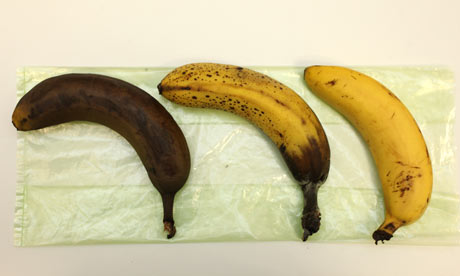
In today’s piece I wanted to give a nice little tip on fruit preservation – specifically bananas. Bananas are one of my favorite fruits. Apparently when I was wee little lad I used to stand up in my crib and yell “nanas” over and over to my mom until she fed me some bananas, and that love affair has never ended. However, unlike most foods, I am rather particular about my bananas; I like them a little green, and once they are spotted brown I simply won’t eat it. Fortunately there is way to keep bananas at their desired state of ripeness far longer than you might think possible.
Normally bananas are kept in a fruit bowl or hanging from a rack. While this is fine, if you are like me and really prefer your bananas at certain point in time, then that is far from optimal as they brown quickly. This leads to bananas simply going uneaten, and I hate wasting food. A far superior method is to actually keep your bananas in the refrigerator!
Once bananas have reached your desired level of ripeness, simply place them in the fridge in your fruit drawer and they will remain at that state for nearly a week! The peels themselves will change plenty, turning brown and kinda nasty looking, but the fruit itself hardly changes, preserving that delicious flavor. Try it out and let me know how it goes!
I hope you all enjoyed my recent post Today’s Health Tip as I am planning on making that a new weekly feature on the site. As much as I like writing more in-depth articles, sometimes all I have time for, and all you want to read, are quick and readily applicable tips you can incorporate into your daily lives.
Continuing in the theme of that post I want to quickly discuss a topic that I touched upon earlier, that of genetically engineered food. As discussed a few days ago when produce is genetically engineered it will have a PLU code starting with the number 8, however do any of us actually want genetically engineered food? I know I don’t, but unfortunately it is around for the time being. If it is going to be around, I certainly want to know if the food I am purchasing has genetically modified ingredients, because at the moment food companies do not have to provide that information.
Fortunately the Environmental Working Group is trying to change that, with the Just Label It campaign. They have a petition that you can sign right online that is being sent to the FDA. They currently have 84,000 signatures with a goal of 100,000. The deadline is March 27, so if you want food companies to tell you if they use genetically modified or engineered food in their products, this is your chance to let them know.
Just for example to let you know how prevalent this is, in 2010 the National Agricultural Statistics Board annual report stated that 93% (93%!) of soybeans produced in the US are genetically modified, specifically Monsanto’s Roundup Ready soybean. Just an FYI, Monsanto is a chemical company (they make Roundup), not a food company and they own patents on the genes of more than 93% of soybeans, 80% of corn, and 95% of sugar beets planted in the U.S. — all genetically modified to be resistant to their weed killer Roundup. Gross.
These particular soybeans have been linked to infertility in hamsters, early death in rats, organ dysfunction in rats and more. If GMO crops are in there, I want to know. I don’t want to feed them to myself, my wife, or especially my daughter. Sign the petition to force companies to simply tell you if they use GMO crops or not, it is that simple.
I am currently in the midst of reading Healthy Child, Healthy World: Creating a Cleaner, Greener, Safer Home. In it I came across a nice little tidbit that I had heard once before but had forgotten all about. When shopping for produce sometimes it can be difficult to tell if it is organically or conventionally grown, and it is almost impossible to know if it is genetically modified. Well here is a little trick that can give you all of that information – the PLU code on the sticker.
Conventionally grown produce has a four-digit code, such as 3577, while organic produce has a five digit code that begins with a 9 (such as 93577). Genetically modified produce also has a five digit code and will begin with an 8 (such as 83577). Nice to know huh?
Bonus Tip – This spring and summer my goal is to increase my local food consumption. My wife and I get local eggs, butter, yogurt, corn, strawberries and a little more while the Farmer’s Markets are open here in Maine. I want to expand that and greatly increase my local produce consumption this year. With that in mind I am going to utilize a website called eattheseasons.com to let me know which foods are in season each week and month. Check it out yourself.








Posted on May 30th, 2013 by Brian St. Pierre
5 Comments »